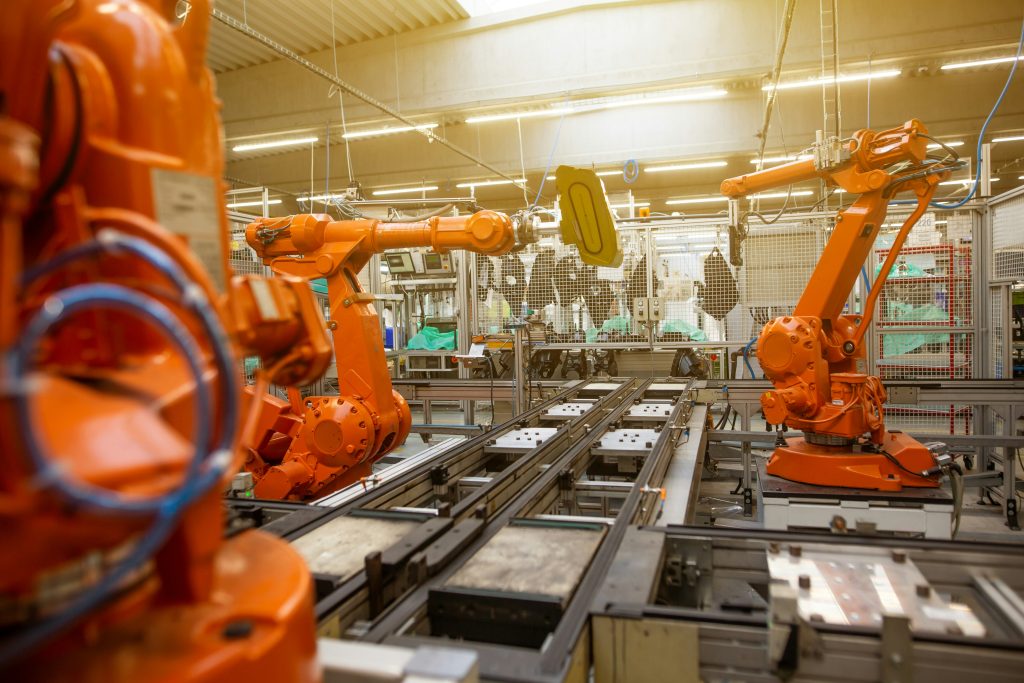
Manufacturing has always been defined by precision, efficiency, and the relentless pursuit of improvement. In 2026, augmented reality is becoming one of the most powerful tools available to manufacturers — transforming everything from assembly lines to quality control.
AR on the Assembly Line
The traditional assembly line relies on workers following printed instructions, wall-mounted diagrams, and years of accumulated experience. AR is changing this fundamentally.
Workers equipped with AR headsets or smart glasses can see step-by-step assembly instructions overlaid directly onto the components in front of them. Rather than looking away from their work to consult a manual, the instructions appear exactly where they’re needed — floating above the part being assembled.
The results are dramatic. Studies consistently show that AR-assisted assembly reduces errors by up to 90% compared to traditional paper-based instructions. Training time for new workers is cut significantly, and experienced workers can handle more complex tasks with greater confidence.
BMW, Boeing, and Volkswagen are among the major manufacturers already deploying AR assembly guidance at scale — with measurable improvements in quality, speed, and worker satisfaction.
Quality Control and Inspection
Quality control is one of the most labour-intensive and error-prone aspects of manufacturing. Human inspectors, however skilled, are subject to fatigue, distraction, and the limitations of the naked eye.
AR is transforming quality inspection by overlaying precise measurement guides, tolerance limits, and reference images directly onto the components being inspected. An inspector wearing AR glasses can see immediately whether a part meets specification — with the augmented overlay highlighting any deviations in real time.
Combined with computer vision and AI, AR inspection systems can detect defects invisible to the human eye, flagging issues before they become costly downstream problems.
Remote Expert Assistance
One of the most practically valuable applications of AR in manufacturing is remote expert assistance. When a complex machine breaks down on a factory floor, the traditional solution is to fly in a specialist — expensive, slow, and disruptive.
With AR, a remote expert can see exactly what the on-site worker sees, annotate their field of view with instructions and diagrams, and guide them through a repair procedure in real time. The specialist never needs to leave their office; the problem gets solved in hours rather than days.
Platforms like PTC Vuforia and Scope AR have pioneered this capability, and it is now deployed across manufacturing facilities worldwide — reducing downtime, cutting travel costs, and making specialist expertise available wherever it’s needed.
Digital Twins and AR
Manufacturing is increasingly embracing the concept of the digital twin — a precise virtual replica of a physical factory, machine, or production line. AR is the bridge that connects these digital twins to the physical world.
Engineers can overlay the digital twin onto the real factory floor, comparing the virtual model to physical reality in real time. Discrepancies become immediately visible. Planned changes can be visualised in context before a single physical modification is made. Maintenance schedules can be optimised based on real-world wear data fed back through AR sensors.
The Future of AR in Manufacturing
As AR hardware becomes more capable and affordable, its penetration into manufacturing will only deepen. The factories of the future will be environments where digital information is seamlessly integrated with physical processes — where every worker has access to the right information at the right moment, and where human expertise is amplified rather than replaced by technology.
For an industry built on precision and efficiency, augmented reality is not just a useful tool. It is becoming a competitive necessity.
Shop VR Headsets
Experience AR & VR for Yourself
The best headsets available now on Amazon — compatible with the latest AR and VR experiences.
The leading standalone VR headset. Wireless, powerful, perfect for immersive content.
Apple’s spatial computing headset. The ultimate immersive viewing experience.
Sony’s PS5 VR headset. Eye-tracking, haptic feedback and 4K OLED display.
* As an Amazon Associate we earn from qualifying purchases.