Buying a property has always required an extraordinary leap of imagination. You walk through empty rooms, study floor plans, and attempt to visualise a future life in a space that bears little resemblance to how it will actually look once lived in. In 2026, augmented reality is eliminating that leap entirely.
AR is transforming every stage of the property buying journey — from initial search through to interior design — and the real estate industry is changing faster than at any point in its history.
Virtual Property Tours
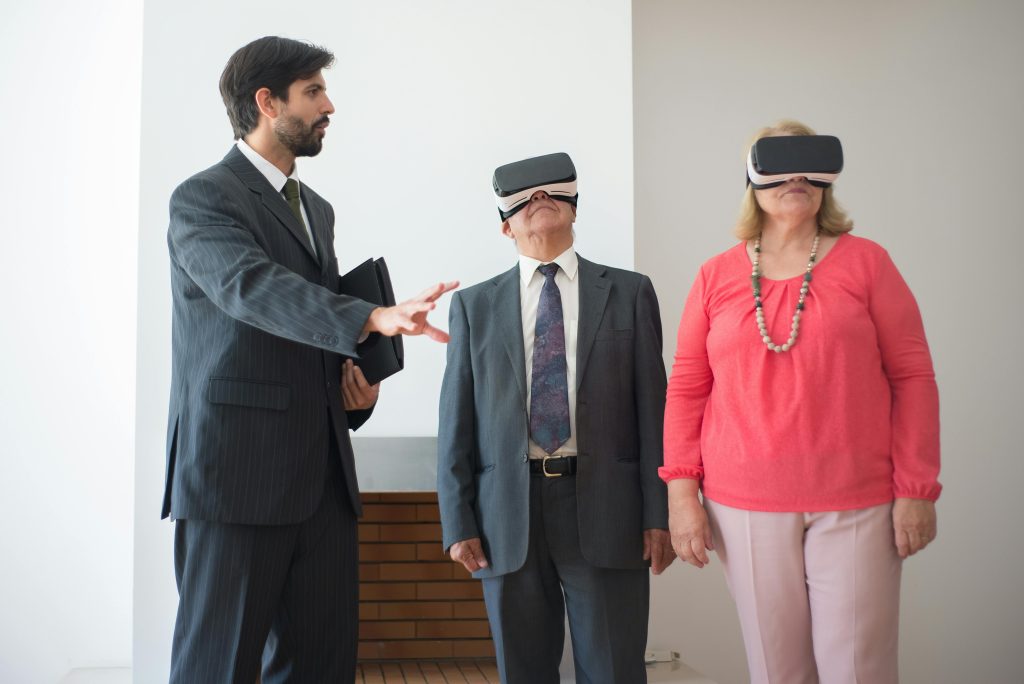
The most immediate application of AR in real estate is the virtual property tour. Where once buyers needed to physically visit every property of interest, AR now allows them to experience a realistic, immersive walkthrough from anywhere in the world.
International buyers — a significant and growing segment of the premium property market — can tour properties in cities they have never visited, experiencing accurate spatial dimensions and architectural details without boarding a plane. For developers selling off-plan properties that don’t yet exist, AR tours allow buyers to walk through a building that exists only as a digital model.
Leading platforms including Matterport and various AR-integrated estate agent portals have made virtual tours standard practice in many markets.
Visualising Empty Spaces
One of the most practically useful AR applications in property is furniture and interior visualisation. An empty property is extraordinarily difficult to evaluate — most buyers struggle to judge whether their furniture will fit, how natural light will fall, or how different design choices will feel in practice.
AR solves this instantly. Apps like IKEA Place and dedicated property AR tools allow buyers to populate empty rooms with virtual furniture at accurate scale, change wall colours, swap flooring materials, and experiment with layouts — all in real time through a smartphone or tablet.
Estate agents are increasingly offering AR staging as a standard service, allowing properties to be presented furnished without the cost of physical staging. The result is faster sales and higher achieved prices.
Neighbourhood and Development Information
AR is extending beyond the property itself to the surrounding environment. Point your phone at a street and AR overlays can display property values, planned development projects, transport links, school catchment areas, and local amenity information.
For buyers evaluating a neighbourhood they don’t know well, this contextual information transforms the assessment process. Rather than researching dozens of data sources separately, all relevant information is presented in context — anchored to the physical locations it describes.
Developers are using similar technology to show buyers how planned regeneration projects will transform areas currently under development, making it easier to sell properties in locations that don’t yet reflect their future potential.
AR in Property Development and Architecture
On the professional side of real estate, AR is transforming how developers and architects work. Building projects can be visualised at full scale on actual sites before construction begins, allowing developers to assess how a proposed building will interact with its surroundings, how shadows will fall at different times of day, and how the finished development will feel from street level.
This capability is particularly valuable in planning applications, where AR visualisations can demonstrate the impact of proposed developments to planning authorities and local communities far more effectively than traditional drawings or scale models.
The Future of Property Buying
As AR hardware becomes lighter and more capable, the technology’s role in real estate will deepen further. Smart glasses that overlay property information as you walk through a neighbourhood. AI-powered AR systems that identify structural issues or maintenance requirements from visual inspection. Shared AR experiences that allow buyers and agents to walk through properties together from different locations.
The property market has always been driven by imagination — the ability to see potential where others see only what exists. Augmented reality is transforming that imagination from a rare talent into a universally accessible tool.
Shop VR Headsets
Experience AR & VR for Yourself
The best headsets available now on Amazon — compatible with the latest AR and VR experiences.
The leading standalone VR headset. Wireless, powerful, perfect for immersive content.
Apple’s spatial computing headset. The ultimate immersive viewing experience.
Sony’s PS5 VR headset. Eye-tracking, haptic feedback and 4K OLED display.
* As an Amazon Associate we earn from qualifying purchases.