Image Credits: Snap
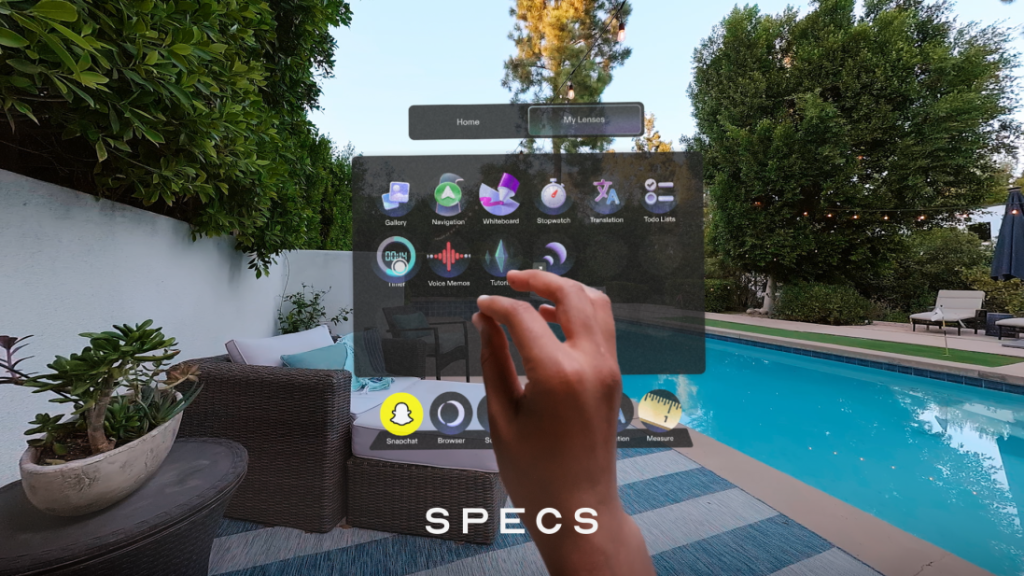
Snap got a second chance last night to explain why its $2,195 Specs deserve to exist — and it spent most of it talking about AI rather than the glasses themselves.
At an event in Los Angeles, CEO Evan Spiegel and other Snap executives unveiled a wave of new features and partnerships for the standalone AR glasses, ahead of a public launch still vaguely dated to “later this fall.” It was a notably more polished outing than June’s reveal, which drew online mockery, calls for Spiegel to resign, and a dive in Snap’s share price. Last night was the recovery attempt.
Specs Intelligence: the headline act
The biggest announcement wasn’t hardware — it was Specs Intelligence, which Snap describes as a new “anticipatory AI” system. The pitch is that it builds an understanding of your goals, priorities, relationships and routines from the apps you connect, then helps you focus on what matters now while nudging you toward longer-term goals.
Spiegel framed it as an “AI native operating system with intelligence designed around your projects,” able to connect the dots across Lenses — Snap’s term for its AR effects — so users can get things done. Notably, it isn’t locked to the glasses: Specs Intelligence pairs with regular devices too, including iPhones and Macs. In practice it looks a lot like an AI productivity assistant that can use the glasses but doesn’t require them.
Entertainment finally arrives
Specs can now connect with HBO Max and Spotify — a small but meaningful addition, since a baseline of streaming and music is exactly the kind of everyday utility smart glasses have mostly lacked. There’s also a basketball training app built with the NBA and WNBA that uses the glasses’ AR to help improve your shot, though how many people will play basketball in heavy goggles is an open question.
A serious enterprise play
Perhaps the most telling announcement was Specs for Enterprise, a program to fold the glasses into corporate workflows, with launch partners including Amazon, Salesforce and Nvidia. The demo leaned on a familiar use case: an IT technician repairing hardware with AR guidance. Snap says it’s building mobile device management, security controls and deployment tools aimed squarely at IT departments.
There’s also a new connectivity option for using Specs away from Wi-Fi: a separately sold charging case with built-in cellular, via a Verizon partnership, at $10/month for Verizon customers and $20/month for everyone else.
Our take
At AugmentedReality.com, we think this event told us more about Snap’s strategy than its glasses. The June reveal sold a piece of hardware and got laughed at for its scuba-mask looks and gaming-PC price. Last night, Snap barely argued about the hardware at all — it argued that Specs are a computer, wrapped in an AI operating system and plugged into enterprise workflows. That’s a much smarter frame, because it stops inviting the “why would I wear these to the pub” comparison and starts inviting a “what can this replace at work” one.
The enterprise angle in particular feels like the real business. Consumer AR at $2,195 is a hard sell, but IT technicians, field service and corporate deployments are exactly where expensive AR headsets have quietly found footing for years. Amazon, Salesforce and Nvidia as launch partners is a credible bench.
What’s still missing is the one thing everyone wanted: a firm ship date. After a launch event, Specs are still only “later this fall,” with a Los Angeles pop-up planned for October before they ship. For a product that has now had two big moments without reaching buyers, that’s starting to feel like the real story. Spiegel’s closing line — that computers should make us more important, not less — was a good soundbite. Whether enough people will pay $2,195 to test the theory is the question the event still didn’t answer.