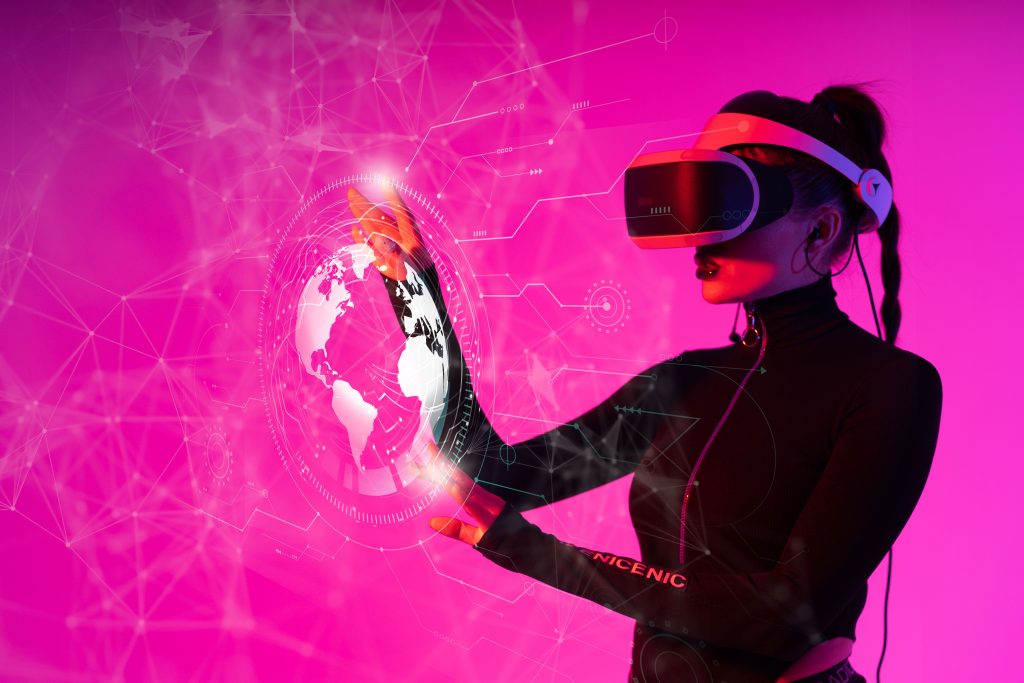
Augmented reality and artificial intelligence were, until recently, two separate conversations. AR overlaid digital information onto the physical world. AI processed data and made decisions. Today, the boundary between them has dissolved entirely.
In 2026, the most powerful AR experiences are not simply overlaying static information — they are dynamically intelligent, context-aware, and capable of understanding the world in real time. The merger of AR and AI is producing technology that is fundamentally more powerful than either could achieve alone.
Understanding the World in Real Time
The core challenge of augmented reality has always been context. An AR headset can display information — but knowing what information to display, and when, requires intelligence.
AI solves this problem. Computer vision algorithms analyse the physical environment in real time, identifying objects, people, surfaces, and spatial relationships. The AR system can then respond intelligently — overlaying relevant information precisely where it is needed, at exactly the right moment.
A surgeon wearing an AR headset powered by AI doesn’t just see a static overlay of a patient’s scan. The system recognises tissue types in real time, highlights structures of interest, and warns of potential risks as the procedure unfolds.
Natural Language and Conversational AR
Large language models have transformed how humans interact with computers. That transformation is now extending into augmented reality.
AR interfaces powered by conversational AI allow users to interact with their environment using natural speech. A technician repairing complex equipment can simply ask “which component needs replacing?” and receive an instant, visually guided answer overlaid directly onto the machinery in front of them.
Microsoft’s integration of AI assistants into HoloLens workflows represents one of the most advanced deployments of this technology currently available. Engineers, surgeons, and architects are already using conversational AR in professional settings.
Personalised AR Experiences
AI enables AR systems to learn from individual users over time. Rather than presenting the same information to everyone, an AI-powered AR system adapts to the specific needs, preferences, and behaviour patterns of each user.
A retail AR application might learn that a particular customer prioritises sustainability information, and automatically highlight eco-credentials when they browse products. A navigation AR system might learn a commuter’s preferred routes and proactively surface relevant information along the way.
This personalisation transforms AR from a tool into something closer to an intelligent assistant — one that understands context, anticipates needs, and presents information that is genuinely useful rather than simply available.
Computer Vision and Spatial Understanding
AI-powered computer vision is solving one of AR’s longest-standing technical challenges — accurate spatial mapping. For AR overlays to feel truly anchored in the physical world, the system needs to understand three-dimensional space with precision.
Modern AI spatial mapping can reconstruct environments in real time, track moving objects, and maintain accurate overlay positioning even as the user moves through dynamic spaces. This has enabled a new generation of AR applications that feel genuinely integrated with reality rather than floating awkwardly on top of it.
Apple’s Vision Pro uses AI-powered spatial mapping that processes millions of data points per second to maintain precise environmental understanding — a capability that would have been impossible without advances in both hardware and machine learning.
The Road Ahead
The convergence of AR and AI is still in its early stages. As both technologies continue to advance, the experiences they enable together will become increasingly indistinguishable from science fiction.
Real-time language translation overlaid in your field of vision. AI systems that identify health risks from visual cues before symptoms appear. Intelligent navigation that understands not just where you are, but what you need. The merger of augmented reality and artificial intelligence is not simply a technical development — it is a fundamental shift in how humans will interact with information and with each other.
Shop VR Headsets
Experience AR & VR for Yourself
The best headsets available now on Amazon — compatible with the latest AR and VR experiences.
The leading standalone VR headset. Wireless, powerful, perfect for immersive content.
Apple’s spatial computing headset. The ultimate immersive viewing experience.
Sony’s PS5 VR headset. Eye-tracking, haptic feedback and 4K OLED display.
* As an Amazon Associate we earn from qualifying purchases.