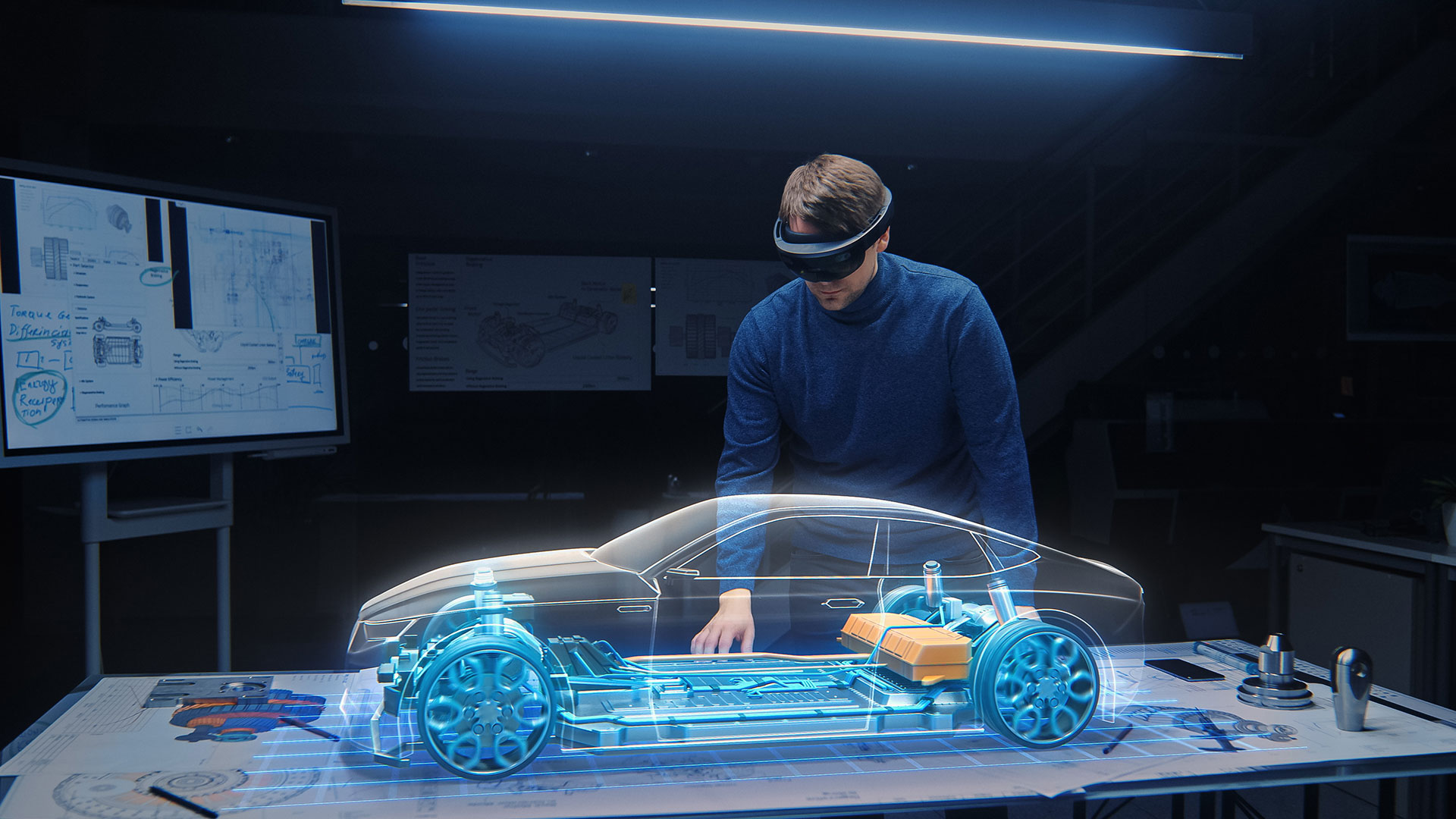
You’ve heard of virtual reality. You’ve heard of augmented reality. But there’s a third term that’s becoming increasingly important in the world of spatial computing — mixed reality.
So what exactly is mixed reality? How does it differ from AR and VR? And why does it matter?
Defining Mixed Reality
Mixed reality, often abbreviated to MR, sits on the spectrum between the fully physical world and the fully digital world.
While augmented reality overlays digital content onto the real world (think Pokémon GO or AR navigation arrows), and virtual reality replaces the real world entirely with a digital environment, mixed reality goes a step further — it allows digital and physical objects to interact with each other in real time.
In a mixed reality environment, a virtual object doesn’t just float over the real world — it understands and responds to the real world. A virtual ball can roll across your real floor and bounce off your real wall. A virtual colleague can sit at your real desk. A digital blueprint can be anchored to a real construction site and stay precisely in place as you walk around it.
The Reality-Virtuality Continuum
The concept of mixed reality was first formalised by researchers Paul Milgram and Fumio Kishino in 1994, who described a “reality-virtuality continuum” — a spectrum running from the completely real to the completely virtual.
Everything between these two extremes falls under the broad umbrella of mixed reality. Augmented reality sits closer to the real end of the spectrum. Augmented virtuality — where real objects are incorporated into virtual environments — sits closer to the virtual end.
In everyday usage, however, mixed reality has come to refer specifically to experiences where digital and physical objects coexist and interact — the most technically sophisticated end of the AR spectrum.
Mixed Reality vs Augmented Reality
The distinction between MR and AR can be subtle but is important.
Augmented reality typically uses a smartphone camera or simple optical display to overlay digital content onto the real world. The digital content doesn’t truly understand its physical surroundings — it sits on top of them.
Mixed reality uses more sophisticated spatial mapping technology to understand the geometry of the real world in three dimensions. Digital objects can then be placed within that understanding — sitting on surfaces, hiding behind real objects, and responding to physical interactions.
The Microsoft HoloLens is the classic example of a mixed reality device. Its spatial mapping capabilities allow holograms to appear genuinely anchored in the real world rather than floating over it.
Real World Applications of Mixed Reality
Mixed reality is already being used across a range of industries:
Healthcare — Surgeons use MR to overlay patient scans onto the operating field, seeing inside a patient’s body in real time during procedures.
Manufacturing — Engineers use MR to visualise complex machinery in three dimensions, identifying faults and planning maintenance without disassembly.
Education — Students can interact with three-dimensional models of everything from human anatomy to historical artefacts, manipulating and exploring them in ways that flat screens cannot replicate.
Collaboration — Remote teams can share mixed reality spaces, working together on three-dimensional problems as if they were in the same room.
The Future of Mixed Reality
As the hardware becomes lighter, cheaper, and more capable, mixed reality will move from specialist professional tool to mainstream consumer technology.
Apple’s Vision Pro represents a significant step in this direction — blending AR and MR capabilities in a consumer-facing device that hints at where the technology is heading.
Within the next decade, mixed reality is expected to become a standard part of how we work, learn, communicate, and experience entertainment — making the boundary between the digital and physical worlds increasingly seamless.
Shop VR Headsets
Experience AR & VR for Yourself
The best headsets available now on Amazon — compatible with the latest AR and VR experiences.
The leading standalone VR headset. Wireless, powerful, perfect for immersive content.
Apple’s spatial computing headset. The ultimate immersive viewing experience.
Sony’s PS5 VR headset. Eye-tracking, haptic feedback and 4K OLED display.
* As an Amazon Associate we earn from qualifying purchases.